
If you are reading this, you probably already know. The scale has moved, your clothes are tighter, and the thing you were sure would never happen again is happening.
First: you are not the only one, and it does not mean you failed. Regain after a sleeve is common. Almost nobody talks about it, because everybody sells you the first six months and nobody writes for year four.
I had my sleeve in 2016. Over the years I drifted, and the weight came back the same way it went: gradually, and mostly without my paying attention. I wrote about my own version in I had a sleeve in 2016. I am on a GLP-1 in 2026. This post is the practical side: why it happens, and what to do first.
Is weight regain after a gastric sleeve normal?
It is common. Surgeons and dietitians expect to see some regain in the years after surgery, and many patients go through it. Studies report a wide range because they measure it in different ways, so be careful with any single number you read online.
What matters more than how common it is: regain is not a verdict on you, and it is not a sign the surgery stopped working. In my case, the tool did not stop working. I stopped using it. Those are different things, and the second one is fixable.
Why weight comes back after a sleeve
There is rarely one big cause. It is usually a few small ones that add up over years.
Protein slips. This was mine. I did not decide to stop eating protein first. It just stopped being the thing I organised meals around. Once protein is not leading, other food fills the space.
Grazing. A small stomach does not fill up on food you eat a little at a time all day. Constant small snacks add up to more than three planned meals.
Soft, easy food. Chips, crackers, sweets and other food that melts in your mouth goes down easily and does not keep you full for long.
Drinking calories. Sweet coffee drinks, juice, soda and alcohol pass straight through a small stomach.
Life. Work, family, stress, a move, an illness. The habits from the first year need attention, and life gets busy. It was easier for me to not look at the situation than to deal with it.
Your body changes too. Hunger and appetite can come back over time, and medical changes can play a part. That is a conversation for your bariatric team.
What to do first
1. Look at it straight
This is the hardest step, and it is the one I avoided longest. Looking straight at it feels worse than not looking. Do it anyway. Weigh yourself, write down what you actually ate for three days, and be honest. You cannot fix what you will not look at.
2. Put protein back first
If you change one thing, make it this. Plan protein into every meal before you plan anything else. When protein leads, the rest of the plate gets smaller on its own.
3. Go back to structure
Three planned meals and a couple of planned snacks. Not grazing, not skipping and then overeating at night. Write it down in advance. The structure from your first year still works. It just needs to be used.
4. Cut the easy calories
Sweet drinks, alcohol, and the soft snack foods that go down too easily. You do not have to be perfect. Start with the ones you know are a problem.
5. Call your bariatric team
This is not admitting defeat. They see regain all the time, and they have more options than you do on your own: a dietitian, support groups, checking for medical causes, and treatment options including medication. For me, the reason to go back was not a number. It was that day-to-day life in my own body had got worse, and I wanted it back.
Can you still lose weight years after a gastric sleeve?
Yes, many people do. The sleeve is still there. What usually needs to change is how you use it: protein first, structure, and dropping the easy calories. Some people also add a GLP-1 with their prescriber. That is what I did, and I wrote about it in I had a sleeve in 2016. I am on a GLP-1 in 2026.
I am not going to tell you how much to expect or how fast. That depends on too much that is specific to you, and anyone who promises a number is selling something.
What I eat now
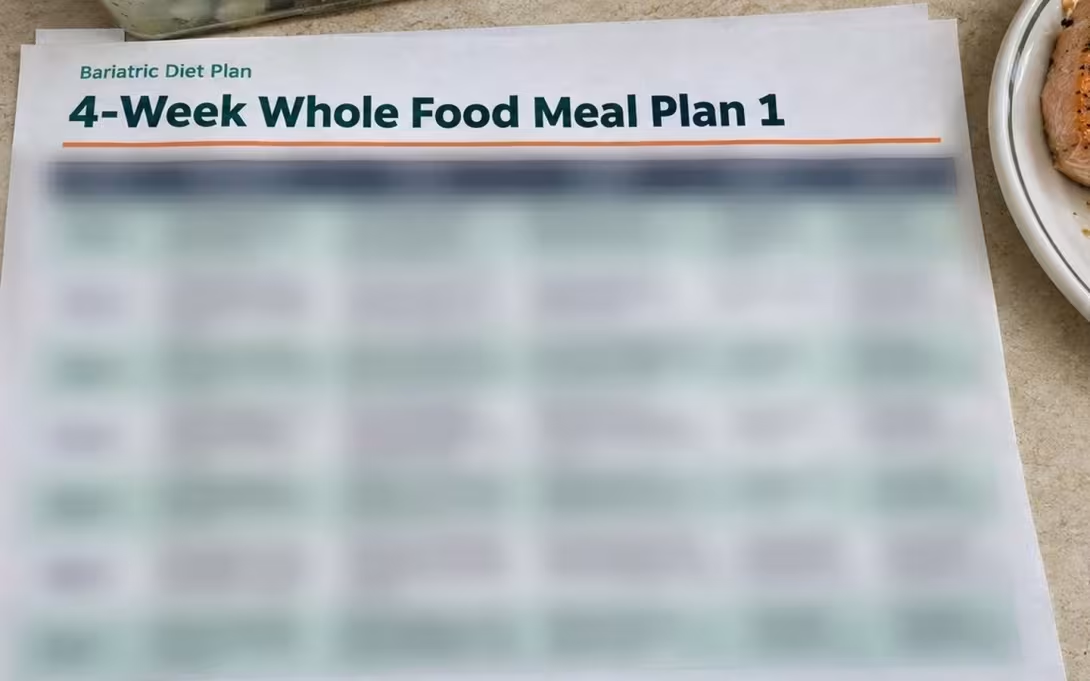
The same plans I wrote for myself in 2016. I start at whole food, not liquids. My stomach is not healing, so I do not need the recovery stages. Normal food, small portions, protein worked out in advance.
If you want a structured few days to break the grazing habit first, the pouch reset guide lays one out. If you want the full plans, the Whole Meal Plan Package is sixteen weeks of small, protein-first whole food meals, the same ones I use.
Questions people ask
What happens 10 years after a gastric sleeve?
For a lot of us, life happens. The habits drift, some weight comes back, and nobody is writing for you anymore. It does not mean the surgery failed. It usually means it is time to go back to the basics that worked in the first year.
Gaining weight 2 years after gastric sleeve: is that early?
Some people see the scale creep up in the second year as their appetite comes back. It is a good time to act, because the habits are still fresh. Start with protein first and structure, and talk to your bariatric team.
Does a pouch reset work after a sleeve?
Think of it as a short reset for your habits, not a fix for your stomach. A few structured days can break a grazing pattern and get you back to planned, protein-first meals.
I am not a clinician, and this is not medical advice. Talk to your bariatric team about regain. They can check for medical causes and discuss every option with you.
General information, not medical advice. Follow your surgeon, prescriber and dietitian.