
Here is the thing nobody warns you about before surgery: not all of the weight you lose is fat.
When weight comes off fast, some of it is lean tissue — muscle. That happens after sleeve gastrectomy, it happens on GLP-1 medications, and it happens on any aggressive diet. It is the normal response to a large, sustained calorie deficit.
That's worth knowing early, because losing muscle is the one part of this you can do something about. Two things protect it: eating enough protein and making your muscles work. Neither is complicated. Both take deliberate effort at exactly the time you feel least like making it.
Why muscle matters more than the mirror
Three reasons, and only one of them is how you look.
Muscle is most of your resting metabolism. Lose it, and you burn fewer calories doing nothing — which makes maintaining your loss harder later, at precisely the point most people start to struggle.
Muscle is function. Getting off the floor, carrying groceries, climbing stairs. Patients who lose a lot of lean mass often feel weak in a way they didn't anticipate, and blame the surgery rather than the muscle loss.
Muscle is insurance. Weight regain after bariatric surgery is common. If what you regain is fat and what you lost was partly muscle, your body composition ends up worse than where you started, even at the same weight on the scale.
Protein first, always
Most programs set 60–80 grams a day, and that number holds for the rest of your life, not just the recovery period. It's the single most repeated instruction in bariatric care, and it exists specifically to limit muscle loss.
The difficulty is mechanical. A stomach that holds a few ounces makes 60–80 grams genuinely hard, and protein is filling. That's why protein shakes and protein water dominate the early weeks — not because liquid protein is superior, but because it's the only form that fits.
Practical order of operations at every meal, for good: protein first, then vegetables, then anything else if there's room. There usually isn't. That ordering is what makes the target achievable at four ounces a sitting.
Movement, in the order your body can take it
Weeks 1–2. Walking, and only walking. Short and frequent beats long and occasional. Getting up and moving also helps with the gas pain and the overfull sensation after eating.
Weeks 2–6. More walking, further. No lifting anything heavy — your abdominal wall is healing and the staple line is still knitting. Your surgeon will give you a weight limit; respect it even when you feel fine.
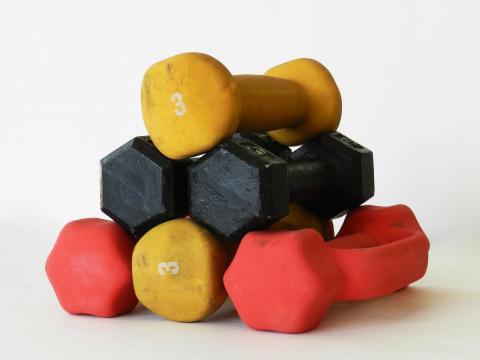
After roughly six weeks, with your surgeon's clearance. This is where resistance training starts, and where the muscle question is actually decided.
Start deliberately light. Full-body sessions rather than isolating one muscle group. One or two sets of 10–12 repetitions, twice a week, is enough to signal your body to hold onto muscle — you are not trying to build a physique here, you are trying to stop losing tissue.
Expect to feel weak at first. You've spent six weeks on liquids and purées and you are in a large calorie deficit. Strength returns, but slowly, and comparing yourself to your pre-surgery numbers will only discourage you.
If you feel faint or unusually tired, stop for the day. That's a signal about fuel and hydration, not a character test.
The mistake most people make
Waiting too long.
The instinct after surgery is to be careful, and for six weeks that instinct is correct. After that, continued caution costs you — every week of rapid weight loss without a resistance stimulus is a week where more of what you lose comes from muscle.
If motivation is the obstacle rather than fear, a few sessions with a trainer who has worked with post-bariatric clients is money well spent. What you want from them is programming and progression, not intensity.
If you're here because of a GLP-1 rather than surgery
Everything above applies. Semaglutide, tirzepatide and the rest produce the same rapid weight loss and the same lean-mass question, and the answer is identical: hit your protein target, and lift something twice a week.
The one difference is that GLP-1 users often have no six-week surgical restriction — which means you can start resistance training immediately, and you should.